
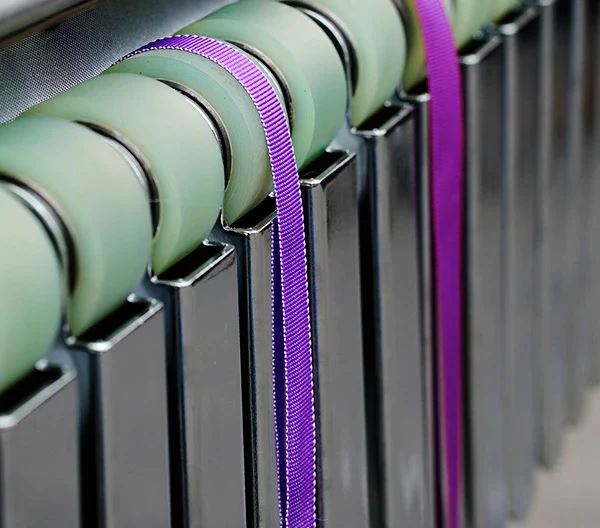
Why a photo is only the beginning
A photo helps identify the product family, but it rarely reveals the yarn count, internal construction, elasticity or required density. Two straps that look similar can require different needle-loom widths, numbers of frames, weft systems or finishing conditions.
For the fastest and most accurate recommendation, send a physical sample when possible and provide the intended raw material. If the product is still in development, a drawing with target dimensions is the next best option.
The minimum information set
A useful inquiry answers five groups of questions before model selection begins.
- Finished product: width, thickness or diameter and acceptable tolerance
- Material: PP, polyester, nylon, cotton, rubber or mixed construction
- Structure: woven, braided, knitted, elastic or rigid
- Appearance: colors, logo, jacquard pattern and required finish
- Production: target speed, daily output, shifts and local voltage
Compare quotations on the same basis
Model names alone are not enough. Compare working positions, width range, carrier or hook count, included accessories, control system, motor specification and the exact scope of installation support.
Ask the supplier to identify assumptions in writing. This makes later changes visible and prevents a low initial quotation from becoming an incomplete production line.